Face clear and sharp
Upload a portrait where the subject is large and sharp — face clear, framing that matches the beat. Soft distant shots fight the identity match.
Viral template
A short police chase: your photo keeps that motion. Genjutsu AI holds the timing. Stills change the subject.
About 10 seconds
On this page
The panel below is the homepage studio, already on this template. The sample is the police chase motion reference. There is one photo slot. Credits show on Generate.
Reference video
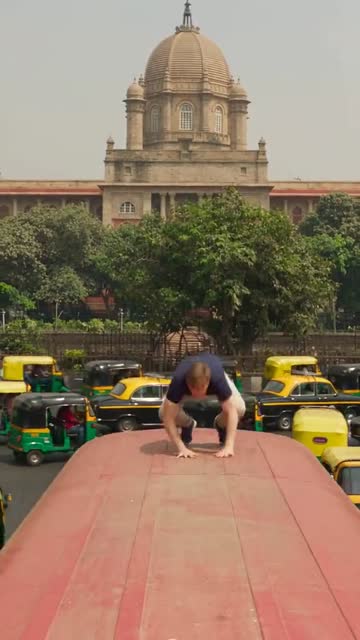
Police Chase AI Trend
10s · 840 credits · Seedance 2.5
Police Chase AI Trend is a Genjutsu AI photo-to-video template on genjutsuai.app. The reference clip is about ~10s: sprint / parkour chase gag with officers in pursuit. Upload a clear photo for the look — face, hair, skin, and clothes from the still — while the sample keeps the beat.
Anyone who wants that police chase with their own face, a friend’s face when that friend already agreed, or a clear portrait that can hold the beat. This page is the template detail for Police Chase AI Trend.
The sample holds the sprint / parkour chase gag with officers in pursuit. A photo changes the subject’s face and look from the still. It does not rebuild the set or rewrite the cut timing.
Background
Police Chase AI is a comic action trend: the subject sprints through a crowded street or rooftop while a pursuit gag plays out behind them.
MakeViral lists police-chase-ai-trend with origin posts cited at about 2M views and follow-on clips in the tens of thousands by early November 2026.
This page is an independent Genjutsu AI photo-to-video remake of that police-chase beat. Genjutsu AI is not affiliated with the listed accounts, MakeViral, or CapCut.
How it works
01
This page opens with the Police Chase AI Trend clip already chosen. That file is the motion, the staging, and the length. Watch it above, then leave it in the studio.
02
A photo is optional. With no photo, the template still generates from the sample. Upload one clear full-or-half body photo, face readable, sharp. With no photo, the template still generates from the sample.
03
Press Generate. The button shows credits for this length and quality first. Keep source audio on by default, or mute if you plan to add your own track later.
Photo tips
The set, the timing, and the camera are already in the sample. The still only has to show the subject clearly.
Upload a portrait where the subject is large and sharp — face clear, framing that matches the beat. Soft distant shots fight the identity match.
Ordinary daylight or clean indoor light is enough. Soft focus, heavy beauty filters, and extreme HDR fight the match across the cut.
The sample already has the police chase staging. A photo with extra people or clutter makes the model guess who the subject is. Crop to the one person (or pair) you mean.
Use a photo of yourself, or of a friend who already agreed (or a child/pet you have permission for). Skip celebrity stills and grabs from someone else’s story without consent.
Credits
The Generate button shows the credit price before you start. It follows the reference length and the quality you pick. A longer sample costs more, and 1080p costs more than 720p or 480p.
Sample length is the default. If a duration is missing, the studio measures the file, then shows credits. Your own reference video is priced from that file. Clips that are too long are rejected before a job starts.
Leave mute off for a soundtrack from the model, or check mute and add music later. Mute does not change the camera or the timing. A failed job returns the credits.
Use cases
The motion and the timing stay. The look changes.
Upload a clear photo and leave the sample. You get a short clip with the sprint / parkour chase gag with officers in pursuit and your subject in frame.
One clip per subject who already said yes (or whose owner/guardian said yes). Separate photos keep each face readable.
Run two photos through the same sample when you want to see which still holds the beat. Staging and timing do not change between runs.
Generate with no photo to watch the motion, or to check credits and length. Add a photo on the next run if you want the look to change.
Examples
The player at the top is the Police Chase AI Trend motion reference: sprint / parkour chase gag with officers in pursuit, with length left in the sample. Press play to see the beat before you generate.
Other published templates use the same photo-to-video studio. Each one keeps its own sample motion, and you can open it to generate on that template’s page.
A Genjutsu AI photo-to-video template of the sprint / parkour chase gag with officers in pursuit. The sample locks the motion and the timing. A photo can change the subject in every frame.
No. The clip generates from the template alone. Upload a photo when you want the look to change — with permission for the subject.
The aim is to keep the sample’s sprint / parkour chase gag with officers in pursuit. A photo changes the subject. It does not rebuild the set or the cut timing.
Look at the Generate button. The shipped sample is about ~10s. The price follows that length and the quality you pick. A failed job returns the credits.
Yes. Source audio stays on uploads by default for this template. Mute in the studio if you want a silent file.
One clear full-or-half body photo, face readable, sharp. Skip group shots, masks, and tiny distant faces.